The new world
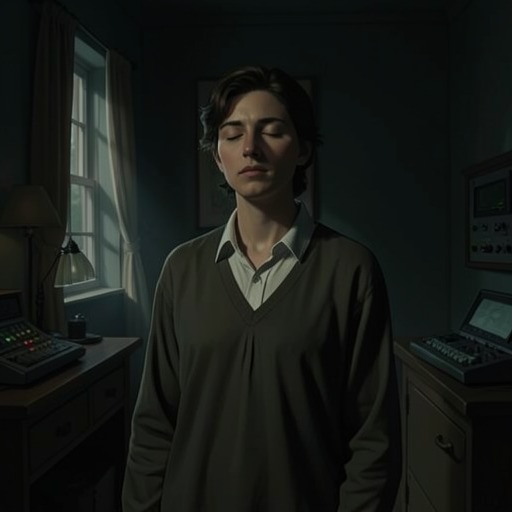
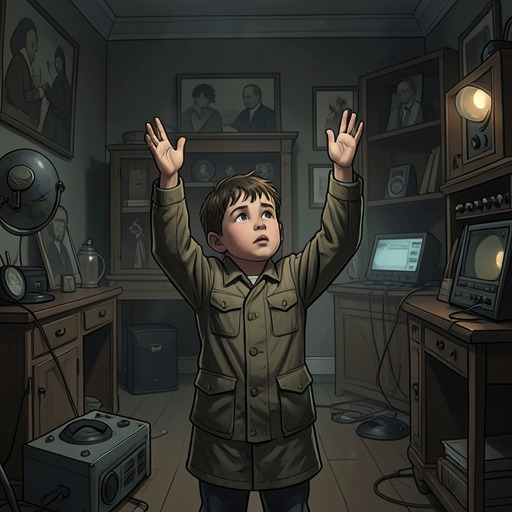
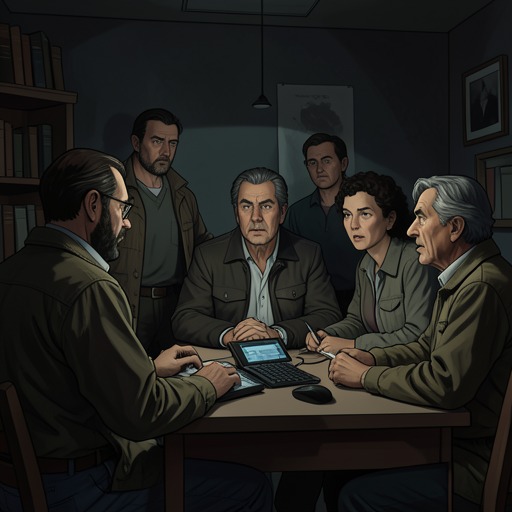
Bird BoxThe new world is the post-Problem order in which the ordinary conditions of life have become dangerous and unreliable. Blindness offers protection from the creatures, but survival also depends on making water, power, food, communication, and social cooperation work under radically diminished conditions. Across Malorie’s story, this world is at once a system of brutal restrictions and a changing place in which organized communities may make a less fearful future possible.
A Changed Material World
The new world announces itself through the breakdown of familiar systems rather than through a single visible boundary. When Malorie reaches the house, Felix explains that the residents had stocked canned goods shortly before the first incident was reported in Michigan’s Upper Peninsula. Their supply is expected to last about three months, but Don immediately notes that the estimate has already shrunk. Malorie wonders whether he means her arrival has added another mouth to feed. Even hospitality is measured against finite provisions.
Tom describes a wider communications collapse: the house has no Internet, the cell phones stopped working weeks earlier, and the residents suspect that the people responsible for the cell towers have stopped working or are dead. Mail and newspapers have ceased to arrive. A landline remains, but its usefulness is uncertain when there may be no one left to call. The surviving connection is not evidence that the old network still functions; it is a remnant whose reach has become doubtful.
The house’s electricity has a precarious local source. Tom explains that a hydroelectric power plant may continue supplying it if the workers left the gates open in the right way. The river therefore has a double role: it may sustain the house’s power, while its flow is also a nearby, audible marker of the environment on which survival depends. Yet the residents have no running water. They draw water from the well, carry waste in buckets, and take turns transporting it to latrines dug as ditches in the woods. These necessary tasks must be done blindfolded, turning basic maintenance into coordinated exposure to risk.
Scarcity is not merely background. After Felix fills two buckets, the water remains untouched on the kitchen counter for twenty-four hours as the housemates grow thirsty and consider whether river water might be drinkable. The delay shows how the new world makes even an available resource uncertain: thirst presses against the need to avoid a potentially dangerous choice.
Rules, Fear, and Discipline
The central survival rule is to avoid seeing the creatures. Blindfolds do not simply mark a changed way of life; they reorganize it. Paths can be outlined with pieces of old picture frames, a rope can tether someone approaching the well to a stake, and household chores must be assigned with the limits of sight in mind. Felix carries a heavy wooden bucket because its weight keeps him grounded, while the frame pieces tell him when he is straying too far to one side. Practical adaptations make movement possible, but they cannot make the danger disappear.
Malorie’s river journey shows what this discipline costs at its most intimate. The children do not remove their blindfolds when they hear the voice of the first living stranger they have encountered beyond one another. Malorie recognizes that their obedience means she has frightened them so thoroughly that they will not disobey her. The contrast with her own childhood rebellion sharpens the consequence: she once smuggled sugar, watched forbidden films, and moved her bed into the living room, while her children have not known comparable freedom.
That obedience has been deliberately taught since infancy. Malorie waited above the children’s chicken-wire beds with a flyswatter; when a baby woke and opened its eyes, she struck its arm, then closed its eyes with her fingers. Keeping the eyes shut brought the reward of being fed. The method makes the danger legible to the children through pain and reward, but it also reveals how survival has entered the most basic patterns of care. The new world’s protection is inseparable from the fear Malorie has had to instill.
Survival as Collective Work
The house’s survival depends on shared labor, but cooperation can be strained by thirst, danger, and uncertain judgment. During Felix’s return from the well, he runs back inside; hands seize him as the back door opens, and the household erupts into overlapping shouts. Tom orders everyone to close their eyes, and Jules demands quiet. The sudden disorder gives way to silence, showing how quickly ordinary movement can become a collective emergency—and how much the group relies on agreed responses when nobody can safely look.
Later, when panic threatens to immobilize the household, Malorie redirects it into a list of concrete tasks. She calls for dinner to be prepared and the waste bucket to be taken out, suggests rearranging the cellar, proposes checking the yard for tools with Felix, assigns Cheryl to feed the birds, and asks Gary and Don to make phone calls. Olympia is to wash the bedding, last cleaned a week earlier. The others initially look at Malorie as if she is a stranger, but the assignments take effect: Gary goes to the telephone and Cheryl heads for the cellar. In a world where large solutions are scarce, routine becomes a form of organization that can interrupt helplessness.
The contrast between isolation and community is clearest at Tucker. Rick explains that the residents once blinded themselves with forks, kitchen knives, or their fingers because a creature had entered during a food search. The breach led to many deaths, including four children killed by a mother who suddenly became violent. The community concluded that blindness was the surest protection and treated it as necessary for the good of the whole group. After a year of fortifying the facility, however, its residents were able to ease that burden; Rick reports no security lapses since. Constance has no scars, a visible sign that the self-blinding policy of the earlier period is not the only way this community now lives.
From Confinement Toward a Future
For Malorie, the new world remains a threat even when a journey seems briefly calm. On the river, she struggles to believe that everything is all right: the rules of this world make her suspect that madmen, beasts, or creatures may be close. The possibility of sleep itself becomes frightening because it might have carried the travelers farther into danger. Later, after the children reach Tucker, she feels fatigue and disorientation while listening to them beside her. They are not blind beneath their coverings, and arrival might give them a chance to see a world they have never known—but only if she can get them there.
At the same time, the new world is not shown as uniformly incapable of renewal. At Tucker, the children’s blindfolds come off. They blink against the bright lights and look to Malorie for guidance; neither cries or complains. Rick describes a facility larger than the entrance hall, with food grown on-site and a small collection of animals: chickens for eggs, a cow for milk, and two goats that the residents hope to breed. He also speaks of a future search for more animals and the possibility of building a farm. The children have seen fish, but no living animals before. For Malorie, the goats are a concrete measure of how much their lives might expand beyond the house and the river.
The new world’s decisive tension is therefore between exposure and refuge, not simply between the old world and a ruined one. Blindness can prevent the creatures from entering a person’s mind, but it exacts bodily and emotional costs; scarce supplies and failed infrastructure make survival contingent, while collective routines can keep a household functioning. Tucker does not undo what the children have endured, but its food, animals, and changed security practices make another arrangement imaginable: a life in which protection need not mean perpetual flight or the same absolute blindness imposed during the community’s earlier, more desperate years.